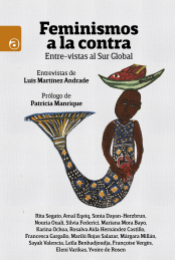
<BR><BR>Françoise Vergès is a French Feminist, Consulting Professor at Goldsmiths College, London and president of the Comité pour la mémoire et l'histoire de l'esclavage (www.cpmhe.fr). She is also a writer of essays; among her topics: slavery, the colonial politics of French republicanism, and racism.<BR><BR>She often works with artists. In 2004, she met with the great poet, writer and activist, Aimé Césaire, at Fort de France, Martinique, and realised a series of interviews which were published in 2004.<BR><BR>Françoise grew up in Réunion Island and has lived in Algeria, France, the United States and England. She was involved in the early French women's liberation movement where she organised campaigns of solidarity with women tortured or imprisoned by dictatorships. Living in different countries, speaking different languages, and fighting for social justice is for Françoise a way of life.<BR><BR>From 2003 to 2010, as the director of the scientific and cultural team of a forthcoming museum, La Maison des Civilisations et de l'Unité Réunionnaise, she introduced a training program for young Reunionnese and innovative methodology. She proposed to build a living "museum without objects" and organized a very wide program of community work around the project. The validating of vernacular practices, of knowledge 'from below' that has been marginalized and ignored were important objectives. The project was inscribed within the debate for museums around the world around immaterial culture and alternative cartographies. The project was stopped in 2010 by the elected conservative majority.<BR><BR>As the president of the Comité pour la Mémoire et l'Histoire de l¹Esclavage - Committee for the Memory and History of Slavery, a committee installed by the French government following the adoption of the 2001 law declaring slave trade and slavery 'crimes against humanity'--- she continued to work on a better knowledge of four centuries of trafficking in human beings and their complex and multiples heritages. In 2011, to mark the ten anniversary of the law, she has renewed the proposal to build in Paris a Memorial to slave trades and all forms of slavery, a space for debate and exchange on the economy of predation, the fabrication of disposable people and their resistance.<BR><BR>http://www.ashacentre.org/index.php/about/inspirational-women/item/275-f...